
Spektrum Leos
Two businesses, one platform

Spektrum Leos manufactures gymnastics leotards and sells in two opposite ways: catalog pieces to families, one at a time; and full collections to gyms — designed from scratch, quoted by embellishment and size, invoiced in installments. The second business lived in WhatsApp, spreadsheets and email. Today both run on the same platform, and the paperwork that used to eat the team’s afternoons fires on its own.
Two businesses that never spoke
Spektrum Leos sells gymnastics leotards in two ways that have nothing in common.
A family lands on the site, picks a size, pays, and it ships. That part is simple.
A gym doesn't buy "a leotard." It buys a season's collection: an original design the coach signs off on, in the fabric and color they chose, with crystals or sublimation, in a size breakdown running YXS to AXL for 40 athletes, 50% up front and the balance on delivery.
That second business — the one that carries the season — lived in WhatsApp, spreadsheets and email. What that cost:
- Quoting depended on who did the quoting. The price of a custom leotard is built from at least 13 variables. Two quotes for the same design might not match, and explaining the difference was always an uncomfortable call.
- Nobody knew which revision each team was on. Which mockup did they approve? Who approved it? Scrolling a three-month chat is not an approval system, and every extra round nobody counted is margin given away.
- Money came in late because someone had to remember. Every deposit, every balance, every invoice was keyed in by hand — after someone remembered.
And all of it had to coexist with a normal store: card payments, live shipping rates, coupons and the same inventory.
How we approached it
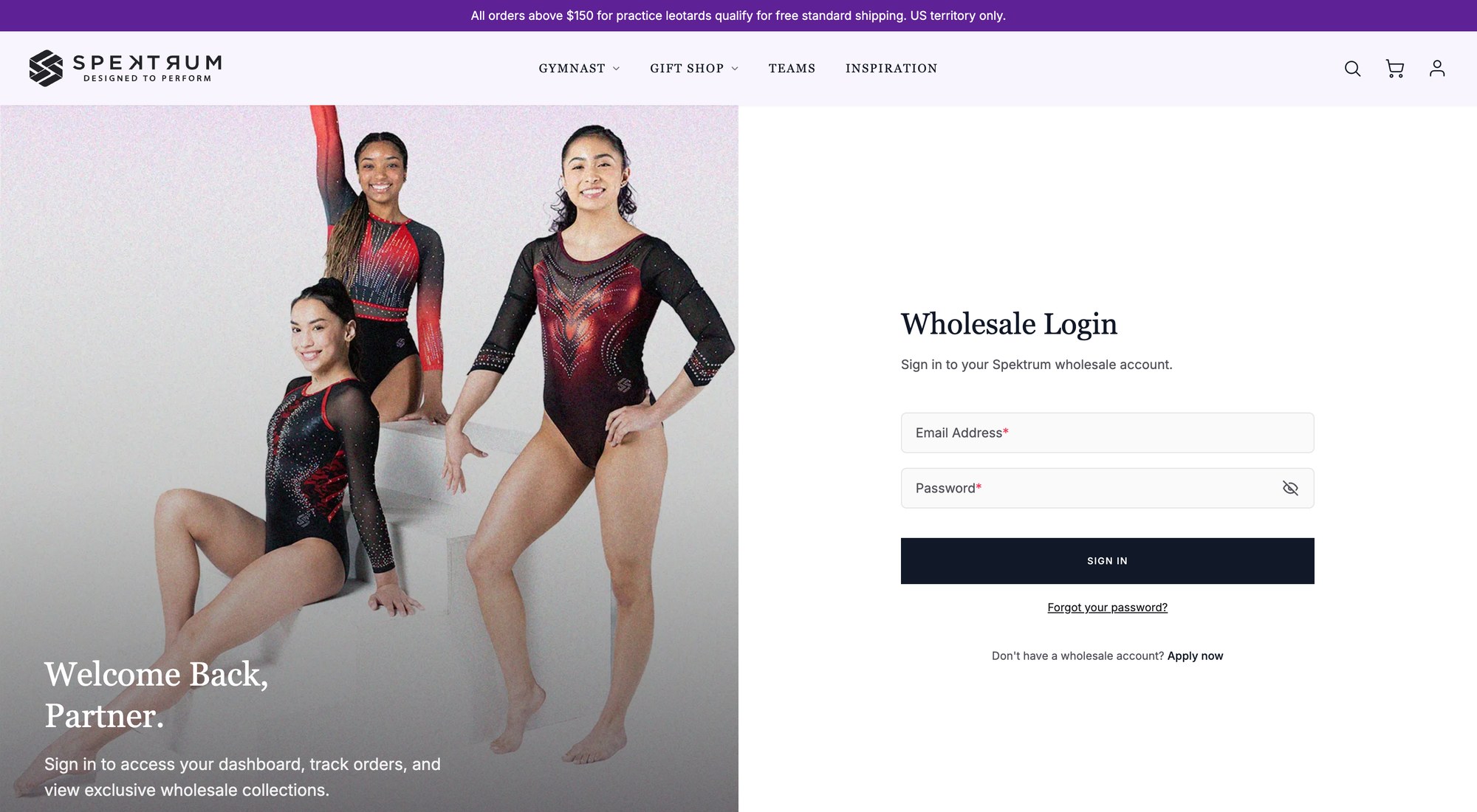
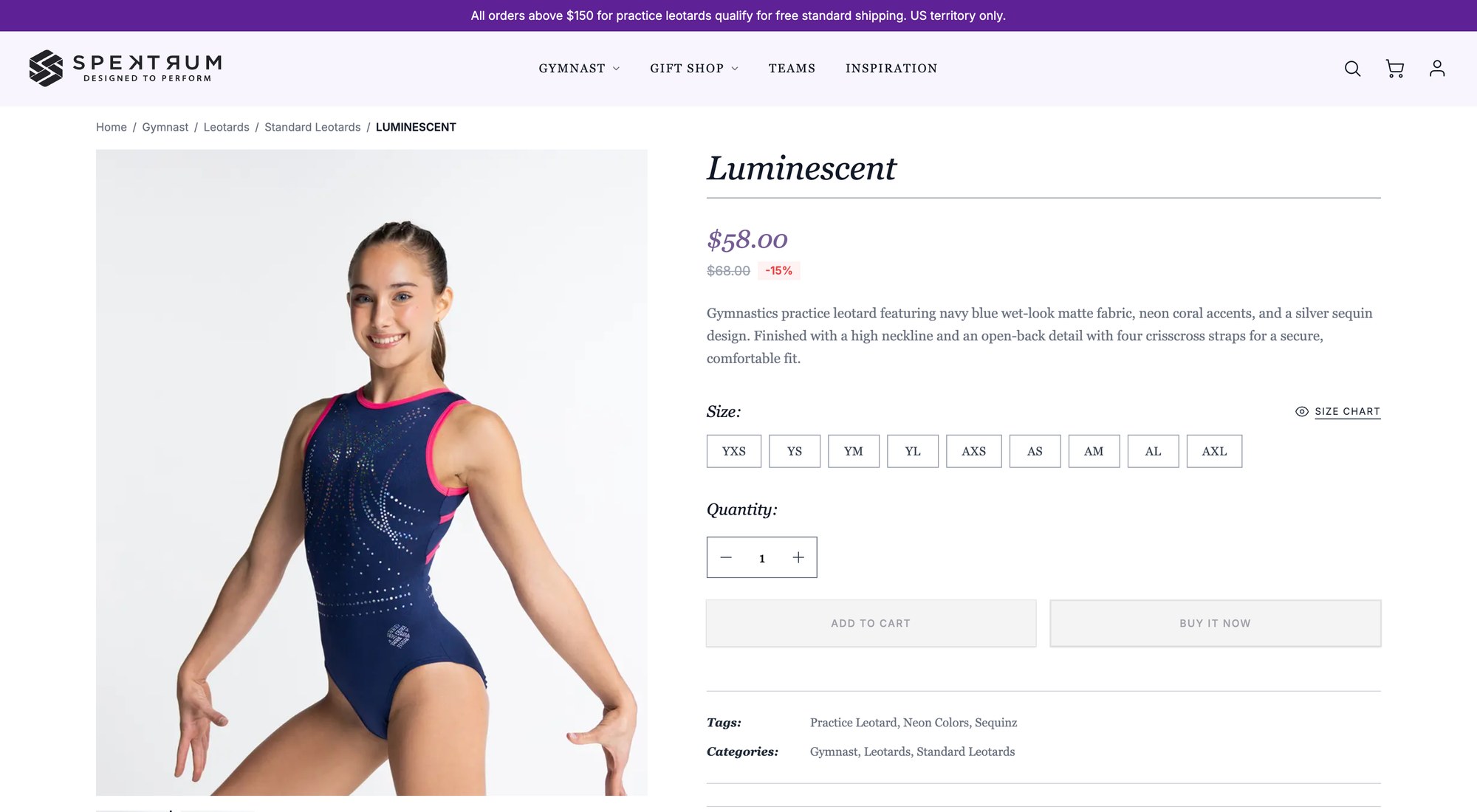
1. One core, two surfaces. We didn't build two stores. We built one platform with a retail channel and a wholesale channel, sharing customers, inventory and accounts. The same person can be a dad buying one leotard on Tuesday and a coach quoting forty on Wednesday, on a single login. Zero duplicated catalog, zero inventory that contradicts itself.
2. We modeled the real business, not the generic one. Off-the-shelf commerce ships carts, checkout and orders. It does not ship "gym," "team," "design ticket," "size breakdown" or "50% deposit." We put those concepts inside the system, so Spektrum's business lived in the platform instead of in one person's head.
3. We turned quoting into a function, not a judgment call. The 13 pricing variables came out of the spreadsheets and into the system. The same design quotes the same today, tomorrow, and no matter who runs it.
4. We automated the paperwork, not the judgment. Invoices, shipments and email notifications fire on their own with every business event. The decisions — approving a gym, approving a design, setting the final price — stay human, on purpose.
5. We handed the business back to its owners. Homepage, banners, popups, product ordering, per-category discounts and staff permissions are all edited from the admin panel. Changing the face of the site needs no deploy and no waiting on us to answer.
What changed for the team
| Before | Now | Who feels it |
|---|---|---|
| Quoting by hand, by judgment | The same 13 variables, the same price every time | The coach, who gets the same figure twice |
| Revisions with no memory | Counted revisions, with a per-ticket history | The design team, which stops giving rounds away |
| Invoicing when someone remembered | Deposit on approval, balance on delivery, automatic | Cash flow |
| Copying every order into the shipping tool | Orders pushed on their own, with shipment and delivery alerts | Whoever answered "has my package shipped?" |
| Notifications written one by one | A branded email for every business event | The customer, who finds out without asking |
| Changing the homepage = ask the vendor | Changing the homepage = three minutes in the panel | The owners |
| Gyms ordered over WhatsApp | The gym logs into its portal, sees its price and orders | The team's afternoons |
The Design Studio
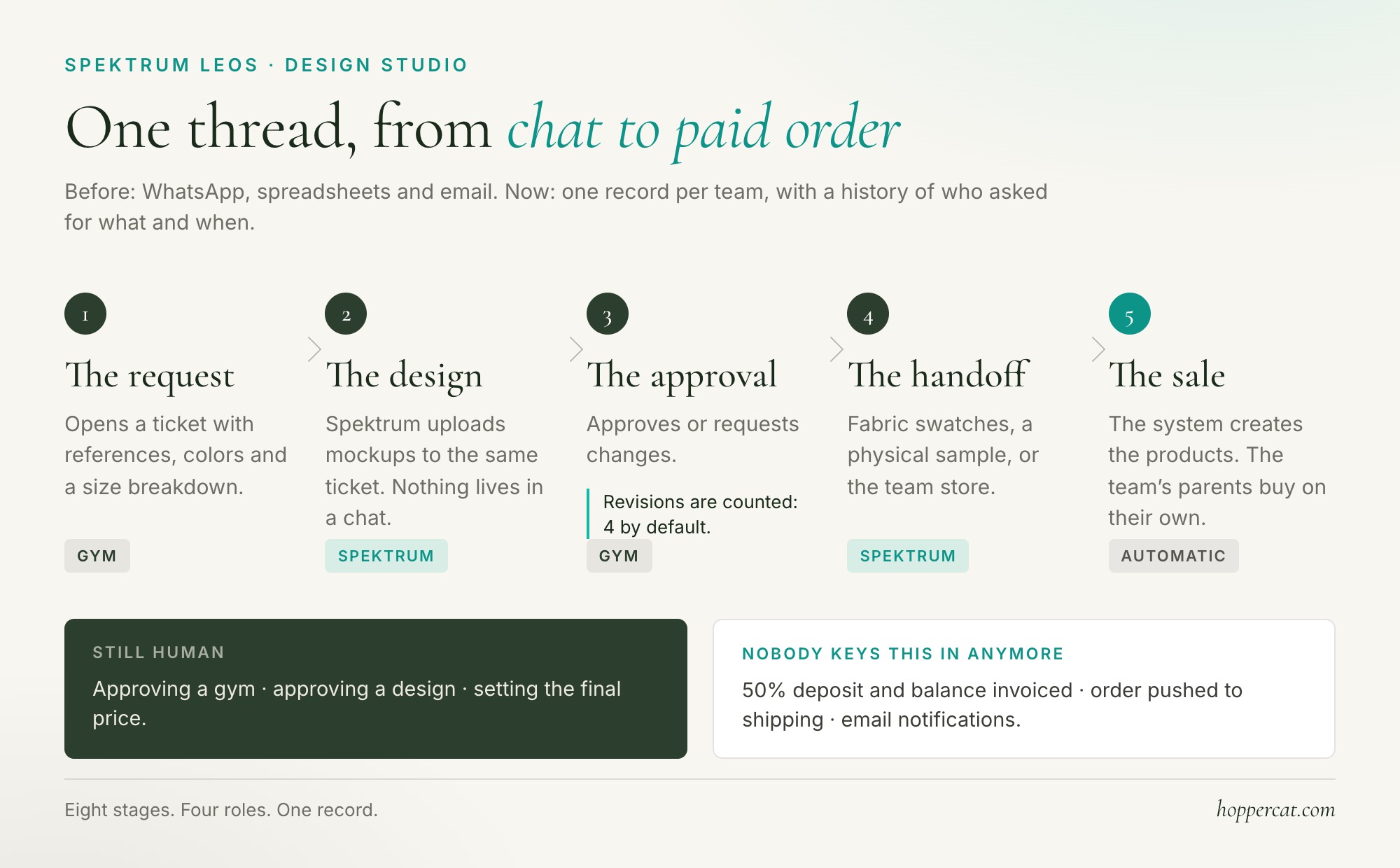
If one piece explains the project, it's this one.
A coach opens the portal, creates a design ticket for their team, picks a category, uploads references, sets the size breakdown and submits. On the other side, Spektrum uploads mockups. The coach approves or requests changes — and here's the detail: revisions are counted. Four by default, configurable per ticket, with a record of who asked for what and when. No more "we sent them eight versions and nobody remembers," which in practice is work nobody billed for.
Once a design is approved, the ticket takes one of three paths: fabric swatches, a physical sample, or straight to the team store. If it goes to the store, the system creates real products in the catalog, tied to that gym's sales channel, so that team's parents — and only them — can buy.
That last jump is what closes the loop. A design that started as an idea in a chat ends up a buyable product with inventory, shipping and an invoice, with nobody keying it in. And it turns every gym into a direct sales channel to its own families, instead of one big order to chase once a year.
What the brand walked away with
From February to May 2026 — 90 days — Spektrum went from having no platform to running a store taking payments in production. What stayed after that:
- Two businesses on one platform. Retail and wholesale share customers, inventory and accounts. There are no two systems to reconcile.
- A price that doesn't depend on who picks up the phone. The 13 variables live inside the system; quoting stopped being a personal judgment call.
- Collections that don't depend on memory. The deposit invoices on approval and the balance on delivery. Money stops waiting for someone to remember.
- One record per team. Who asked for what, when, and which mockup was approved. Conversations stopped being the company archive.
- The owners run their own site. Homepage, banners, promotions and permissions all change from the panel, with no call to us.
- Operational staff with real permissions. We built a restricted role so the team can run the day-to-day without touching settings, admin users or refunds.
- The knowledge got written down. Every production problem we solved is documented inside the project. If another vendor walks in tomorrow, they don't start from zero — and that belongs to the client, not to us.
What we won't claim
We're not going to show you a "+X% conversion." The site went live in May 2026, and comparing it against the previous operation — WhatsApp, spreadsheets, manual keying — isn't a chart, it's a change of category. Measuring "conversion before vs. after" when there was no checkout before would be inventing a number.
We're also not going to say AI did this alone, or that it replaced a team. What our AI-first method did do was let a small team hold two business models at once, across two very different surfaces, without quality falling over on the way.
And there are open items, written inside the project itself: observability, edge protection and full email authentication. They live on a public checklist in the repository, not hidden.
What this means for your brand
If your business sells two ways — simple retail on one side, and on the other a long process with quoting, approval, deposits and production — you're probably solving it today with two systems that don't talk, or one system doing both badly.
You don't have to choose. A serious commerce platform supports the simple catalog and the complex process, as long as someone sits down and models the complex process instead of forcing it into a cart.
That's what we did here: a system that speaks the language of the business — gym, team, design ticket, size breakdown, deposit — instead of bending the business to speak the language of the software.

Ready for a diagnosis?
Enter your name, website and email or WhatsApp. We check 42 points on your business and send you a written report, usually in under an hour. No call required.
Get your free diagnosis